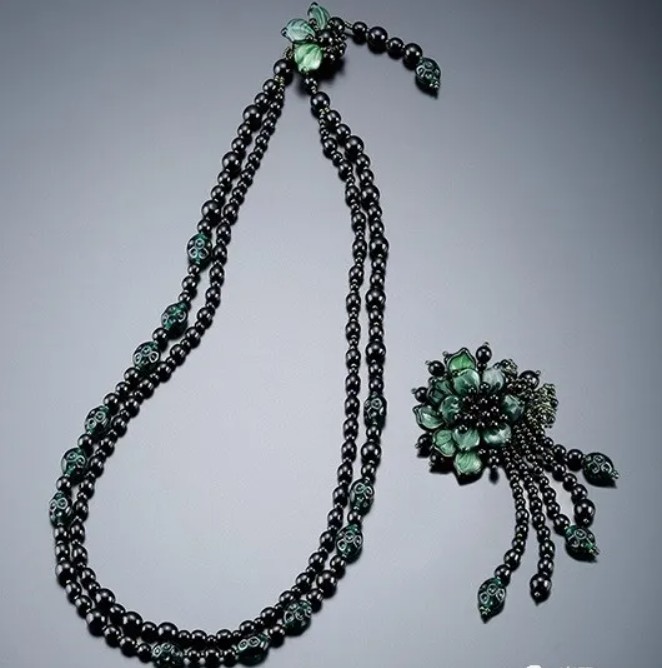
Course Introduction
This certification course is supervised by Mari Watanabe, one of Japan’s leading researchers and authorities in the field of costume jewelry.
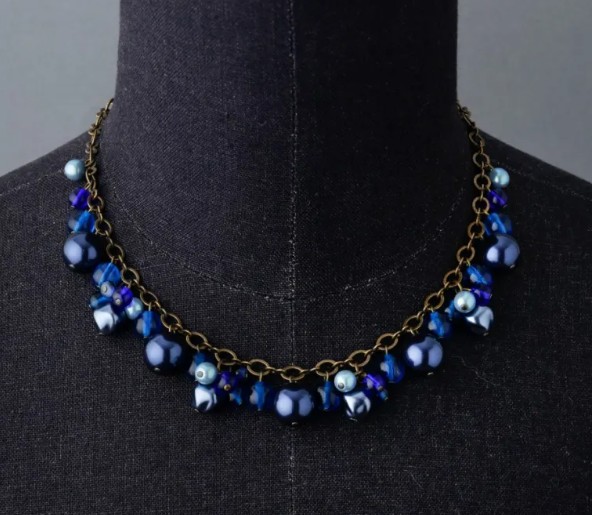
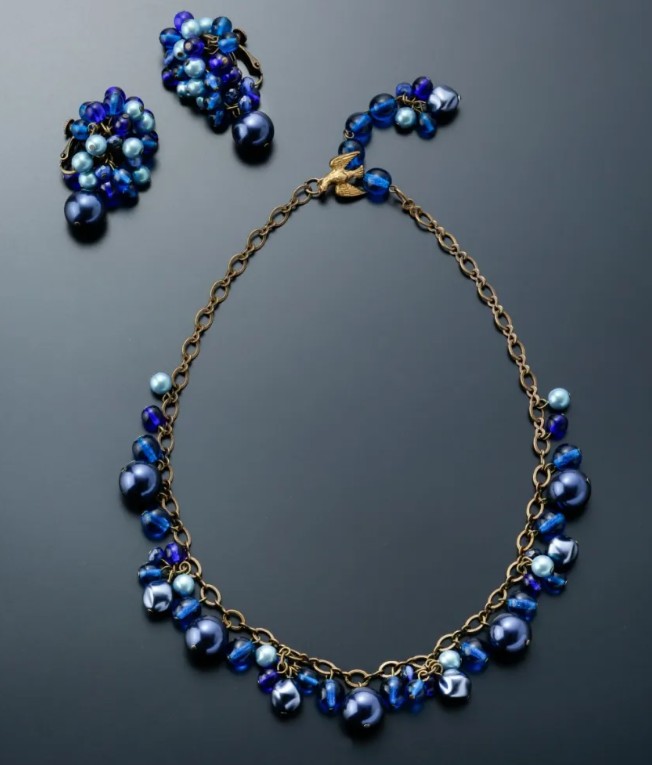
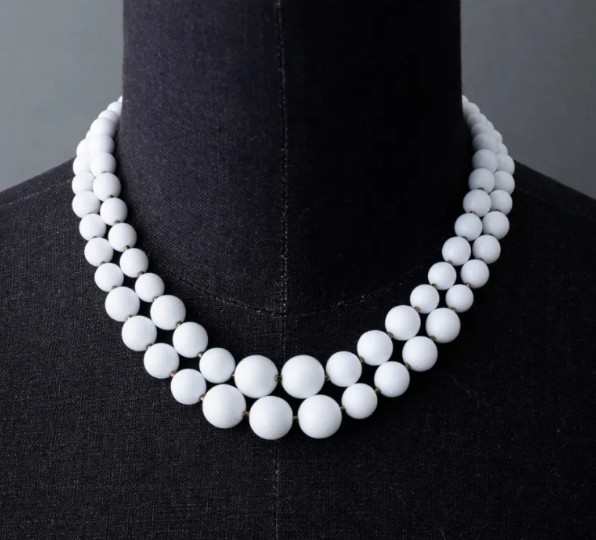
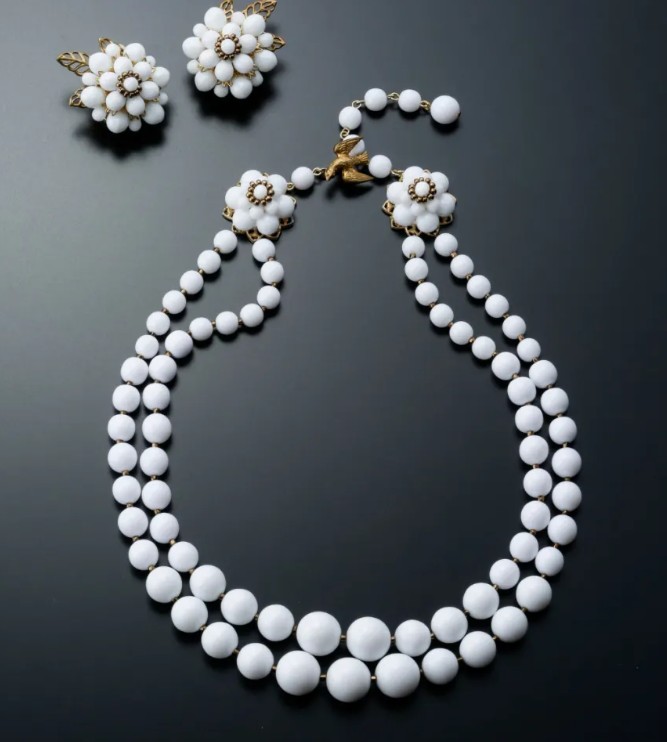
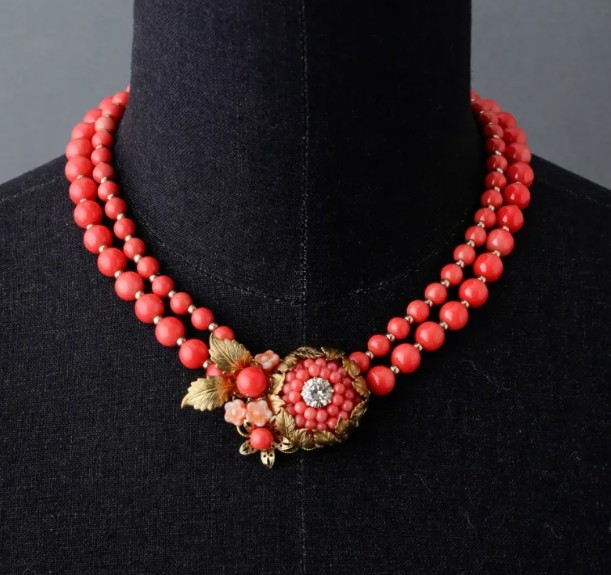
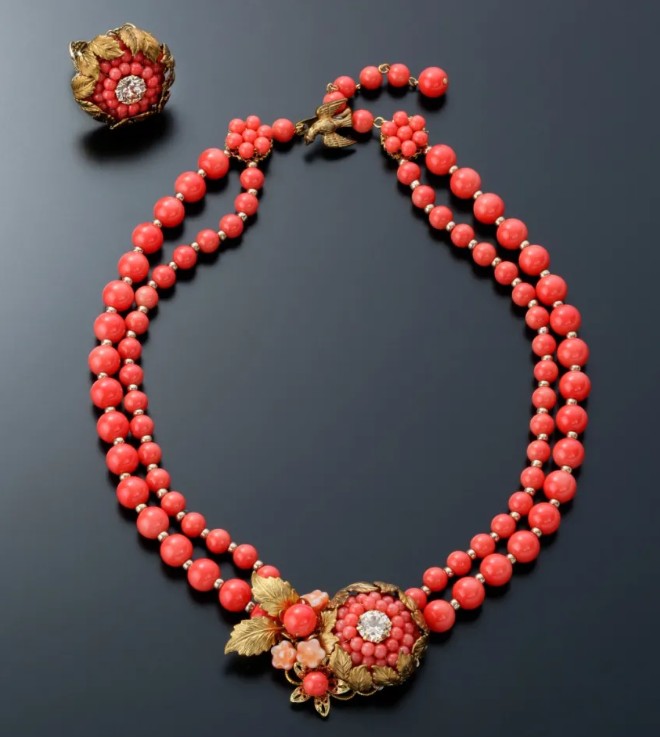
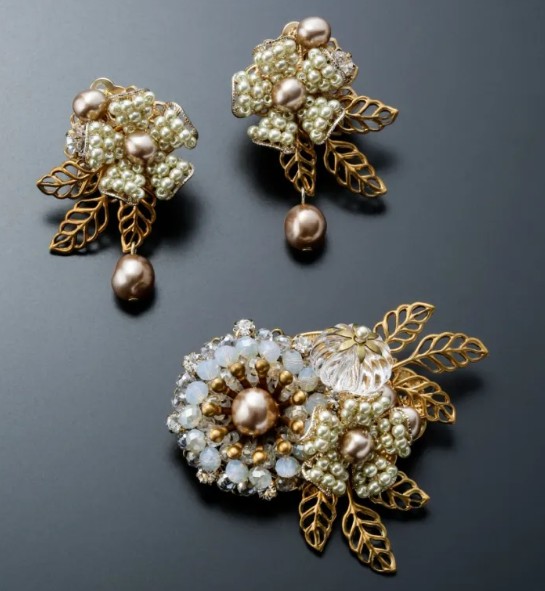
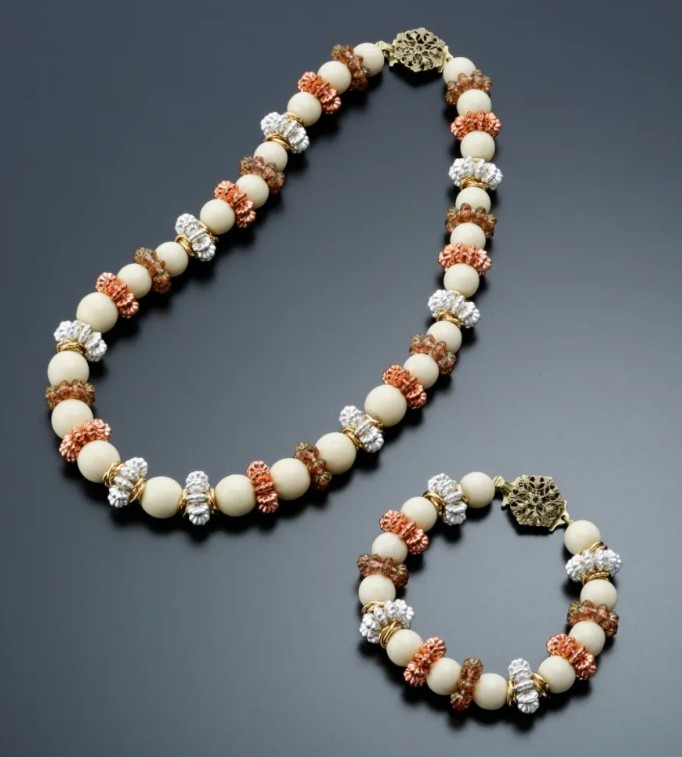
Miriam Haskell jewelry has earned worldwide recognition and continues to attract countless admirers and collectors. Its distinctive craftsmanship, intricate construction techniques, and timeless artistic beauty are highly respected in the world of costume jewelry.
The course features a meticulously developed textbook that provides comprehensive, detailed, and professionally structured learning materials.
Through this program, students will systematically master the essential techniques of costume jewelry making, while gaining an in-depth understanding of the historical evolution of costume jewelry and the specialized knowledge behind various jewelry styles and designs.
Combining historical insights, technical expertise, and practical instruction, this textbook serves as a comprehensive guide to the art and craftsmanship of Miriam Haskell–style jewelry, offering students an invaluable resource for both professional study and creative development.
The History and Art of Costume Jewelry
The history of human adornment dates back thousands of years. Archaeological discoveries from ancient civilizations around the world, including Egypt, Greece, and Rome, have revealed numerous examples of decorative ornaments and jewelry.
Since ancient times, jewelry and accessories have served not only as personal adornments but also as symbols of status, wealth, and power, particularly among royalty and other influential members of society.
Throughout the long evolution of jewelry and accessory culture, costume jewelry is said to have originated in Europe around the 16th century.
As jewelry-making techniques advanced, artisans developed the ability to produce glass that closely resembled precious gemstones. Royalty and aristocrats began reserving their valuable jewelry for formal occasions, while wearing glass-based alternatives for informal outings to reduce the risk of theft.
These decorative pieces came to be known as “Art Jewelry”, and are believed to have contributed to the origins of what we now call “Costume Jewelry.”
Miriam Haskell — The Queen of Costume Jewelry
Miriam Haskell was born on July 2, 1899, in Indiana, in the American Midwest. Her parents were Jewish immigrants from Eastern Europe who owned a clothing store.
As the eldest of four children, Haskell helped in the family business while completing her high school education and studying education at the University of Chicago.
In 1924, at the age of 24, Haskell arrived in New York City with $500 borrowed from her father. She opened a costume jewelry boutique at the McAlpin Hotel, located in Herald Square.
Inspired by the pioneering influence of Coco Chanel, Haskell went on to establish her own distinctive costume jewelry brand in the United States, eventually achieving a reputation that rivaled Chanel’s in the world of fashion accessories.
Her creations attracted an extraordinary following, including First Lady Jacqueline Kennedy, Hollywood actresses Joan Crawford and Greta Garbo, and members of the British royal family.
As celebrities and influential women around the world embraced her designs, Miriam Haskell jewelry gained international recognition and became highly sought after.
Her remarkable contribution to the industry earned her the title “The Queen of Costume Jewelry.”
The Distinctive Craftsmanship of Miriam Haskell Jewelry
One of the defining characteristics of Miriam Haskell jewelry is its exceptional craftsmanship.
Every component is meticulously assembled by hand using thread and metal wire. Adhesives are avoided whenever possible, allowing the pieces to retain the integrity and refinement of traditional jewelry-making techniques.
Each bead, regardless of its size, is individually prepared and carefully secured to the base with metal wire, demonstrating an extraordinary level of precision and attention to detail.
Unlike conventional flat jewelry designs, Miriam Haskell creations are richly dimensional and sculptural.
Their beauty extends beyond the front surface. Every angle—from above and below to the left, right, sides, and even the back—is thoughtfully considered, resulting in elegant three-dimensional compositions.
This approach reflects a fundamental principle of jewelry design: the human body is three-dimensional, and jewelry should be designed in harmony with its natural contours.
By carefully considering the curves and proportions of the body, each piece achieves a natural and comfortable fit while enhancing the wearer’s elegance.
This harmonious relationship between artistic expression, structural design, and the human form is one of the most distinctive and enduring qualities of Miriam Haskell’s costume jewelry.